Naples Street Food: Every Item, What It Costs, and Which Counter to Buy It At
Naples built its food culture around a window rather than a table. Almost everything worth eating here is handed to you in paper, costs between €2 and €6, and is meant to be finished before you reach the end of the street.
Short answer
The core street food list is pizza a portafoglio at about €2, pizza fritta at €2.50 to €4, a cuoppo of fried seafood or vegetables at €3 to €6, frittatina di pasta at €2 to €3, sfogliatella riccia at €2 to €2.50 and babà at €2 to €3. A casual walking circuit of the classics is usually cited around €12 to €15.
What counts as street food in Naples?
Street food here means anything sold through a window or over a counter and eaten standing or walking: folded pizza, fried pizza, a paper cone of fried seafood, a fried pasta cake, and pastry from a bar counter. The price band is roughly €1.50 to €6, and none of it involves a table.
The distinction matters because Naples does not treat street food as a downmarket version of restaurant food. Di Matteo's street window sells pizza made in the same wood-fired oven, from the same dough, as the pizza served to seated customers a few steps away. What changes is the format and the price. You pay about €2 instead of about €7 because you are not occupying a chair, not because the pizza is worse.
That has an economic history behind it. Dense housing without kitchens produced a city that cooked outside and ate on the move, and the format survived long after the housing changed. It also explains why the food is engineered for one hand, why almost nothing needs cutlery, and why the paper cone is a piece of technology rather than packaging. The skill that came out of all this is taken seriously enough that UNESCO added the art of the Neapolitan pizzaiuolo to its intangible heritage list in 2017.
| Item | What is inside | How it is cooked | Sign of a good one |
|---|---|---|---|
| Pizza a portafoglio | the same margherita dough, tomato and mozzarella as the seated version | 60 to 90 seconds in a wood-fired oven at 430 to 480°C | too hot to hold, and it folds without cracking |
| Pizza fritta | ricotta, provola, cured pork or salami, sometimes tomato | deep-fried until the dough inflates into a pillow | it puffs high, the seal has not burst, the outside is not greasy |
| Cuoppo di mare | small fish, calamari rings, sometimes prawns | floured and dropped into hot oil together | audible crunch, no oil pooling at the bottom of the paper |
| Cuoppo di terra | crocché, arancini, zucchini flowers, eggplant | the same fryer, bigger pieces | the potato inside is still steaming when you bite it |
| Frittatina di pasta | pasta bound in béchamel, traditionally ham and peas | breaded, then deep-fried into a puck | it holds its shape when bitten instead of collapsing |
| Crocchè | potato, often with provola melted in the middle | breadcrumbed and fried into an oval | crisp shell, no chalky center |
| Sfogliatella riccia | semolina, ricotta, candied citrus peel, cinnamon | baked in fanned, paper-thin layers | the layers shatter and end up down your front |
| Sfogliatella frolla | the same filling | baked in a smooth shortcrust case | sandy, soft crust that holds rather than crumbles to dust |
| Babà al rum | yeasted sponge | baked, then soaked in rum syrup | it drips when you press it |
| Taralli 'nzogna e pepe | flour, lard, black pepper, almonds | baked hard into a ring | audible snap, whole almonds visible in the dough |
Pizza a portafoglio: the €2 anchor of the whole scene
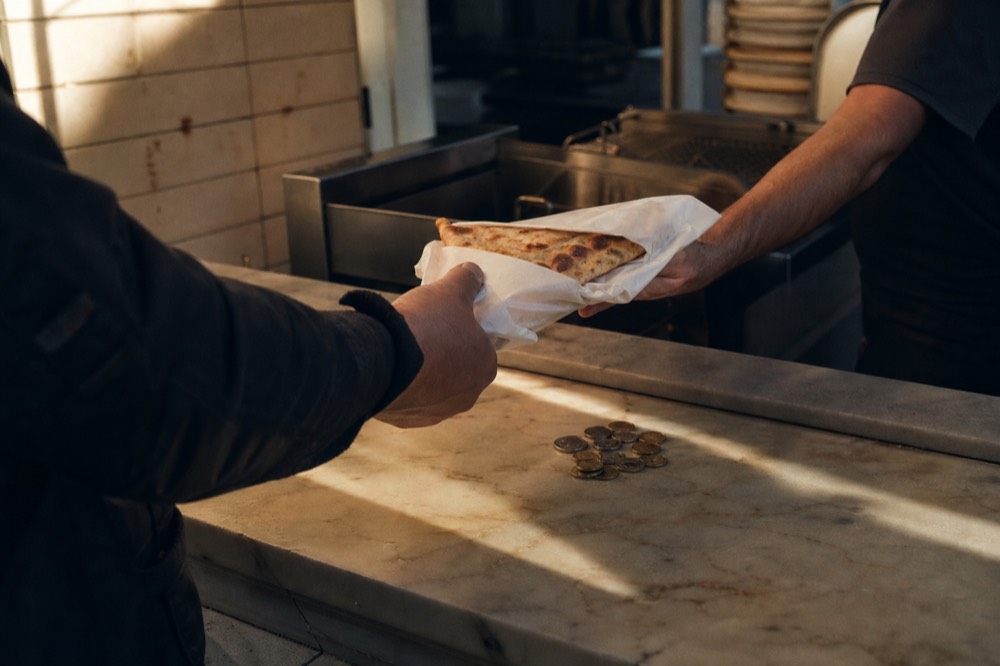
Pizza a portafoglio is a full margherita folded in half and then in half again, wrapped at the point, and handed over for about €2. The reference counter is Di Matteo's street window at Via dei Tribunali 94, open daily from roughly 9am until midnight. You eat it walking, from the point inward.
The word means "wallet", which is exactly what the fold produces: four layers of dough sealing the topping inside so the whole thing survives being carried. It is not a slice, and it is not a smaller pizza. It is the same disc, and that is why it is such absurd value. Two euros buys the identical product that costs about €6.50 plus a €1 cover in a dining room.
Handling it is a skill nobody explains. Hold the folded point, keep the open end angled up, and start at the tip where the crust is thickest. The middle of a Neapolitan pizza is deliberately wet, so the fold is not a stylistic choice, it is the only way to move it. Anyone who wants the full etiquette will find it in how to eat a Neapolitan pizza properly.
There is a piece of political trivia attached to this exact item. During the July 1994 G7 summit in Naples, Bill Clinton ate a pizza a portafoglio at Antica Pizzeria Di Matteo with a Coca-Cola, and the pizzaiolo who folded it, Ernesto Cacialli, went on to open a place of his own trading on that afternoon. Thirty years later the window still sells the same thing at the same kind of price.
Pizza fritta: dough that gets fried instead of baked
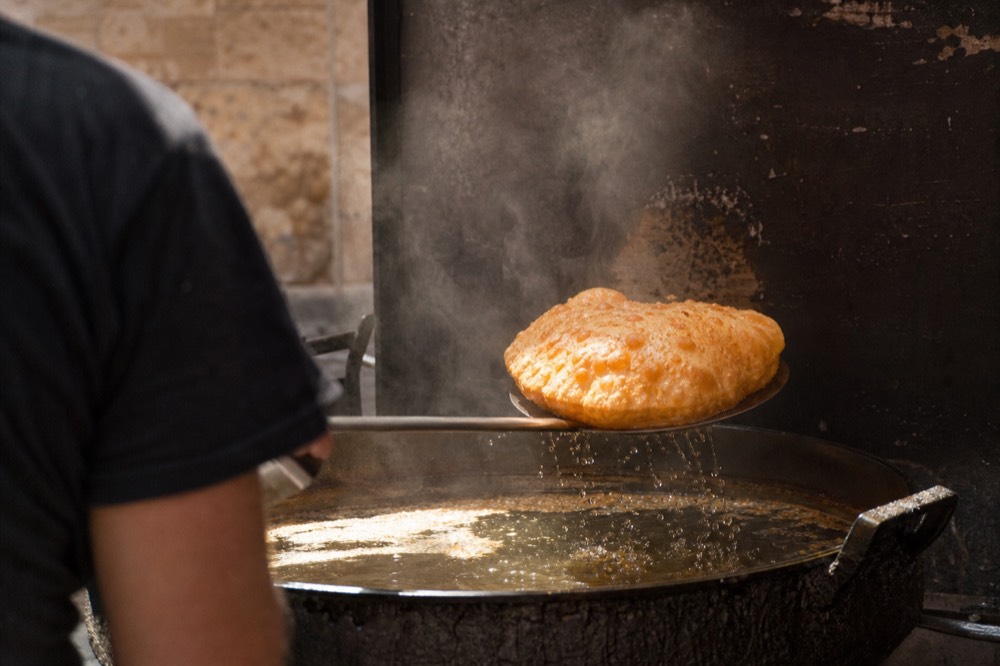
Pizza fritta is pizza dough stuffed with ricotta, provola and cured pork, sealed like a large turnover and deep-fried until it inflates. It costs €2.50 to €4, it eats like a full meal, and it is the item most visitors walk past because it does not look like pizza.
Its origin is practical rather than glamorous: fried pizza needs a pot of oil rather than a wood oven, which made it the thing you could sell when fuel was short and ovens were being rebuilt. It stayed because it is genuinely better than it needs to be. The dough puffs into a hollow pillow, the filling melts into one thing, and the whole item weighs almost nothing until, quite suddenly, it does.
Judge it on inflation and grease. A good one balloons in the oil and comes out pale gold and dry to the touch. A tired one sits flat, browns unevenly and leaves a slick on the paper. Fresh oil matters more than the filling, which is why the friggitorie with the fastest turnover are the ones to pick even when the queue looks annoying.
A stuffed fried pizza plus a coffee is one of the cheapest real meals in southern Italy, and it is the reason the calorie math of a Naples food day rarely works out the way people plan. Our pizzeria shortlist covers which rooms fry as well as they bake.
The cuoppo, and how friggitoria culture actually works
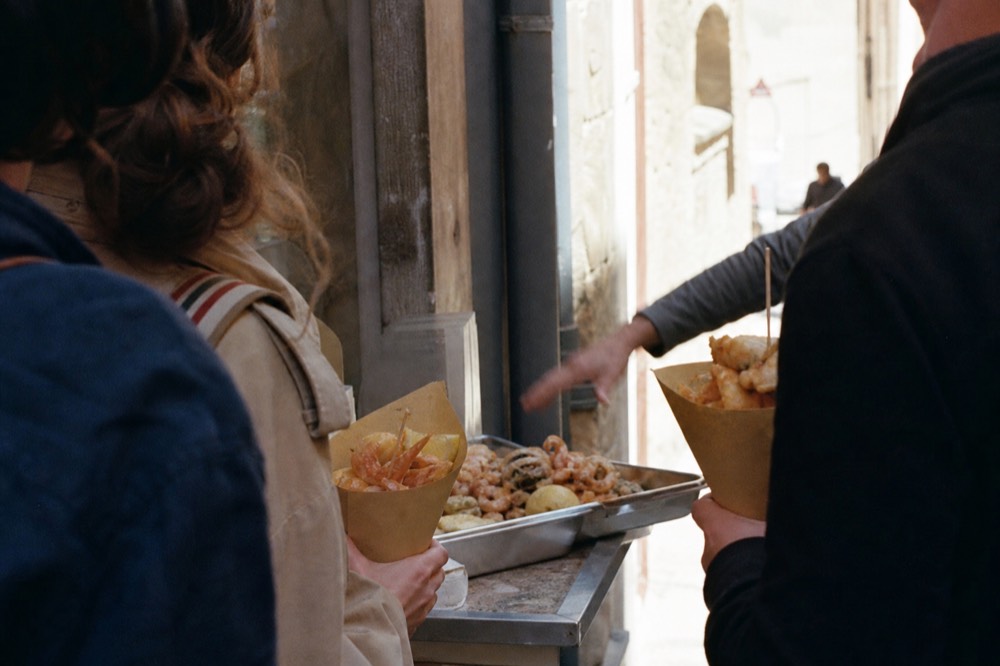
A cuoppo is a cone of fried food in rolled paper, €3 to €6 depending on size and whether you take the seafood version or the vegetable one. Friggitoria Vomero at Via Domenico Cimarosa 44 is the reference address, open Monday to Saturday about 10:00 to 14:30 and again 16:30 to 21:30, closed Sunday.
The friggitoria is a separate institution from the pizzeria and it runs on different hours, which is the single most useful thing to know about eating in Naples. That afternoon gap is real and it catches people out daily. Arrive at three and the shutter is down. Arrive at five and the oil has just been changed, which is precisely when you want to be standing there.
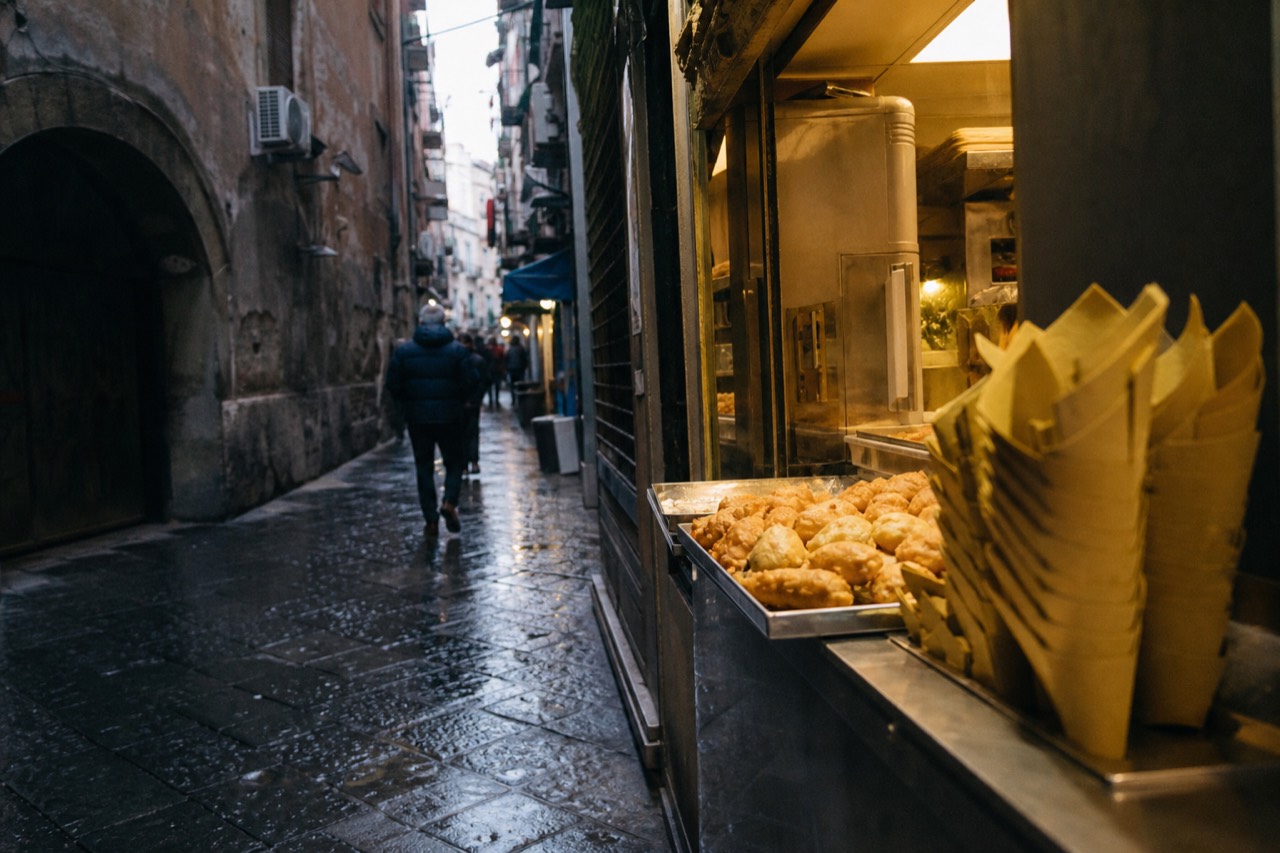
Ordering is simple and wordless if you want it to be. You look at the trays, you say misto or point, you say small or large, and you pay at the counter. The seafood version is small fish and calamari rings, salted the moment it leaves the oil. The land version is potato croquettes, arancini, fried zucchini flowers and eggplant. Neither is delicate and neither improves with waiting, because paper only does the work of a plate for so long.
Vomero is a funicular ride up from the center and worth the trip for the neighborhood as much as the cone. If you would rather stay low, the friggitorie clustered around the Pignasecca do the same job, and the Pignasecca market guide explains how the market stalls and the fry counters work together. There is also a two-hour route that walks exactly that stretch, six stops for about $33, if you want the market and its fry counters handled in one go: see what the market route covers. For the wider picture of which streets own which dish, Naples food geography breaks the city down district by district.
| Venue type | What it sells | Hours pattern | How you order |
|---|---|---|---|
| Friggitoria | fried everything: cuoppo, crocchè, frittatina, pizza fritta | split shift, commonly closed 14:30 to 16:30, closed Sunday | point at the tray, pay at the counter, eat outside |
| Pizzeria street window | folded pizza, sometimes fried pizza | long hours, one on Via dei Tribunali runs to about midnight | say portafoglio, hand over coins, keep walking |
| Pizzeria dining room | the full pizza list, seated, with a cover charge | lunch and dinner service, worst queues at 1pm and 8pm | a numbered ticket, or a name on a list at the door |
| Pasticceria | sfogliatella, babà, seasonal pastry | early to evening, one near the station opens about 6:30am | pay at the till first in many places, then the counter |
| Market stall | produce, fish, cheese, mozzarella by weight | roughly 9 to 7, Monday to Saturday | ask by weight in grams, small cash preferred |
Frittatina di pasta and the fritters beside it
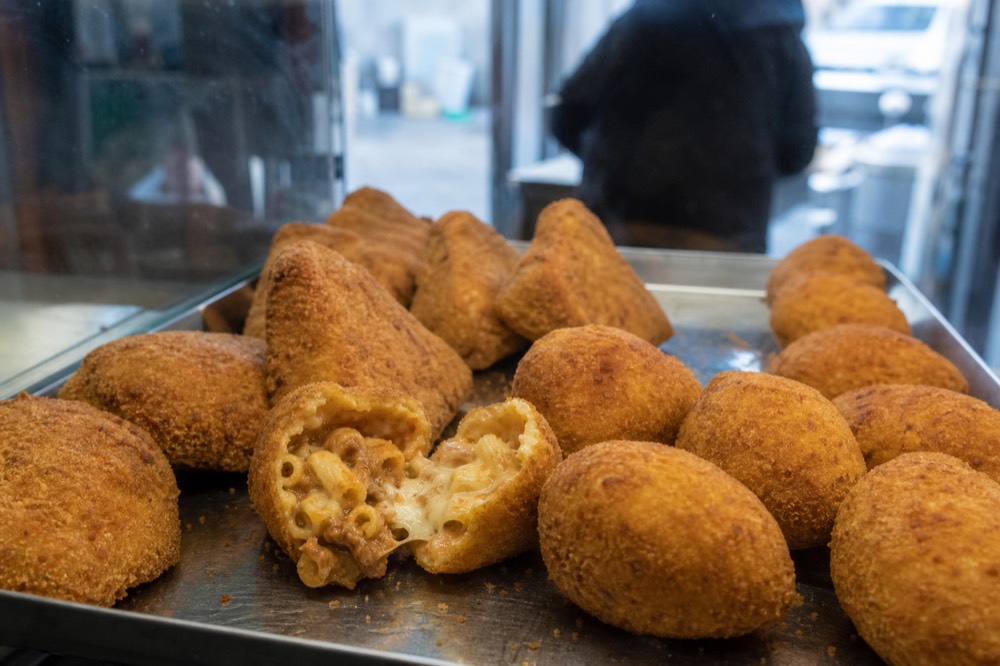
Frittatina di pasta is leftover pasta bound with béchamel, traditionally with ham and peas, pressed into a puck, breaded and deep-fried. It costs €2 to €3. Beside it on every friggitoria tray sit crocchè, potato croquettes often hiding melted provola, and arancini.
This is the item that converts people. It looks like nothing in a glass case: a beige disc among more photogenic things. Then you bite it and understand that Naples solved the leftover-pasta problem more decisively than anywhere else in Italy. The béchamel keeps the middle creamy while the crumb goes crisp, and the whole thing costs less than a bottle of water at an airport.
Crocchè is the other constant. Long, oval, breadcrumbed potato, sometimes with a core of provola that pulls when you break it. The test is the center: it should be soft and steaming, never chalky. Arancini in Naples tend to be larger and rounder than the Sicilian version and are usually filled with ragù or with ham and cheese.
None of these three keeps. They are made in batches, they sit for an hour at most in a busy place, and they are miserable reheated. That is the argument for buying from the counter with the longest local queue rather than the one with the best English menu. Travelers looking for the counters that never make a list will find several in lesser-known food spots.
Sfogliatella, babà and the sweet half of the street
Sfogliatella riccia costs €2 to €2.50, frolla €1.50 to €2, and babà al rum €2 to €3. All three are bar-counter food, eaten standing, usually with an espresso. Attanasio near Stazione Centrale opens around 6:30am Tuesday to Sunday and is closed Monday, and its queue is normal rather than a warning sign.
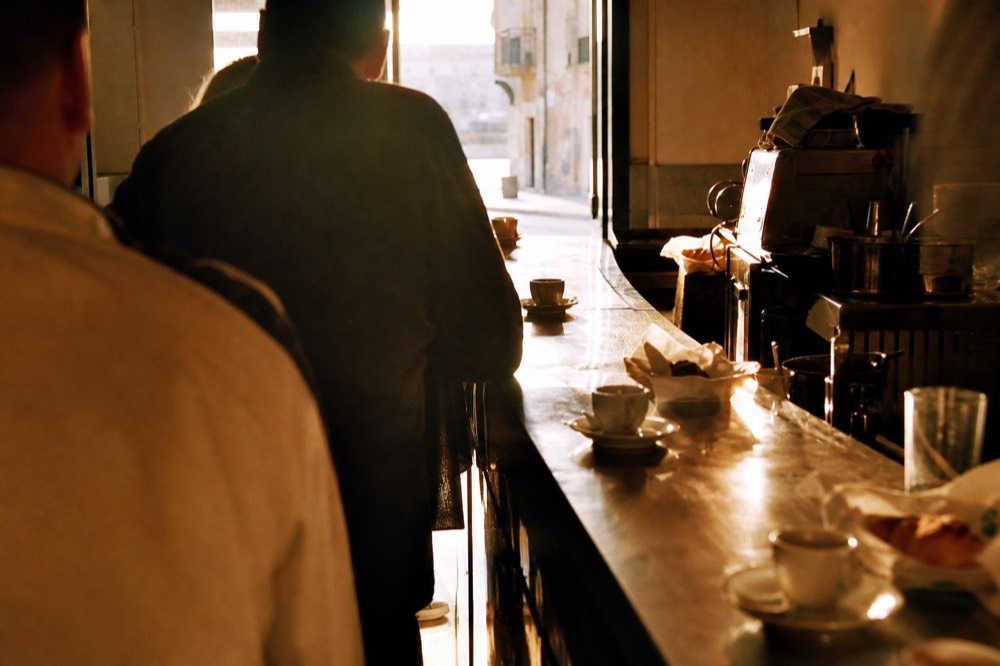
Sweet street food in Naples is not dessert. It is breakfast, and it is the mid-afternoon reset. The bar counter is the venue for both, and the transaction takes about two minutes: order, drink the coffee standing, eat the pastry over the paper, leave. Nobody lingers, and a table can carry a different price in some places.
Riccia is the famous one, the ribbed shell made of dozens of fanned layers that crack apart. It is at its best within minutes of leaving the oven and noticeably worse a few hours later, which is the whole reason people time their morning around a specific counter. Frolla, the smooth shortcrust version, holds up better through a walk and costs a little less.
Babà is the third pillar and the most Neapolitan of the three: a yeasted sponge soaked so thoroughly in rum syrup that it drips. Scaturchio on Piazza San Domenico Maggiore is the benchmark. Sunday mornings, pastry counters across the city fill with people buying boxes tied with ribbon to take to lunch, which is a nice thing to watch even if you are only buying one thing. There is more on the morning ritual in the Neapolitan breakfast.
Where each item is best, address by address
The addresses on file are Di Matteo's window at Via dei Tribunali 94 for folded pizza, Friggitoria Vomero at Via Domenico Cimarosa 44 for cuoppo, Attanasio near Stazione Centrale for sfogliatella, and Scaturchio on Piazza San Domenico Maggiore for babà. La Pignasecca covers everything raw and several fry counters.
These are reference points rather than a decree. Naples has hundreds of counters doing the same items well, and the practical rule is turnover: pick the place where the tray is being emptied and refilled in front of you. But if you want fixed points to plan a day around, these are the ones with the longest track record and the most consistent recent reports.
| Item | Reference address | Hours on record | Price |
|---|---|---|---|
| Pizza a portafoglio | Di Matteo street window, Via dei Tribunali 94 | daily, roughly 9am to midnight | about €2 |
| Cuoppo | Friggitoria Vomero, Via Domenico Cimarosa 44 | Mon to Sat 10:00 to 14:30 and 16:30 to 21:30, closed Sun | €3 to €6 |
| Sfogliatella riccia and frolla | Attanasio, in the lanes near Stazione Centrale | Tue to Sun from about 6:30am, closed Mon | €2 to €2.50 riccia, €1.50 to €2 frolla |
| Babà and pastry counter classics | Scaturchio, Piazza San Domenico Maggiore | benchmark pasticceria on the square | €2 to €3 |
| Market produce, fish, mozzarella | La Pignasecca, Montesanto | Mon to Sat roughly 9 to 7, closed Sun | by weight at the counter |
| Pizza fritta | friggitorie along the Spaccanapoli axis | friggitoria split hours | €2.50 to €4 |
Two of these sit outside the historic center: Vomero is up the hill, Attanasio is by the station. That is not an accident. The places locals rate are frequently a short walk off the axis every guidebook maps, which is also the honest argument for walking with someone who lives here. A small-group route through the Spanish Quarter counters, for example, covers ground most visitors never turn into: see how many places the premium route has left if that is the version you want.
The rules of eating standing up in Naples
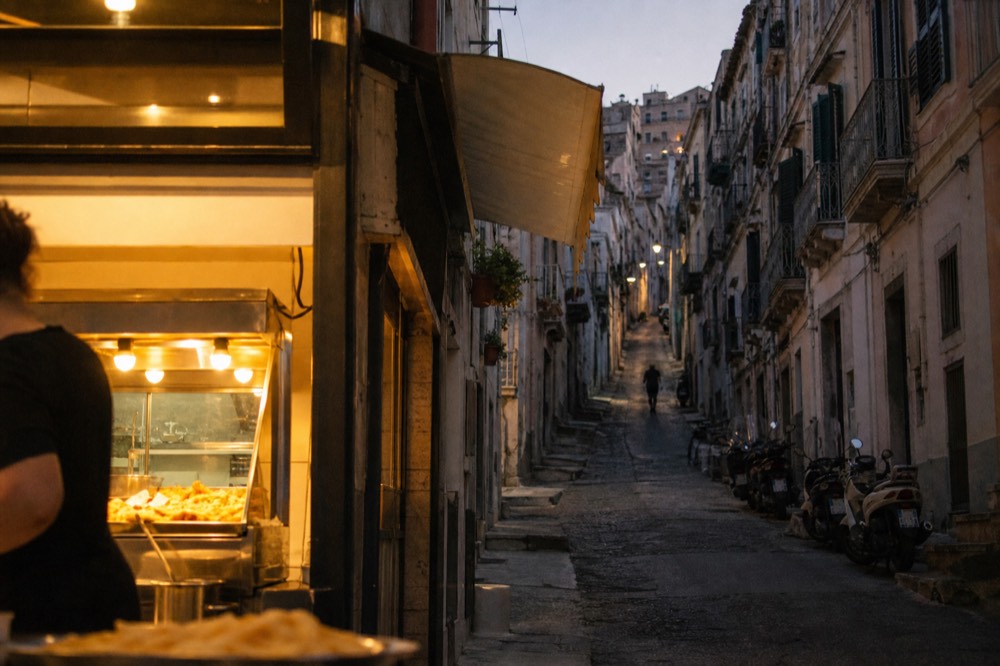
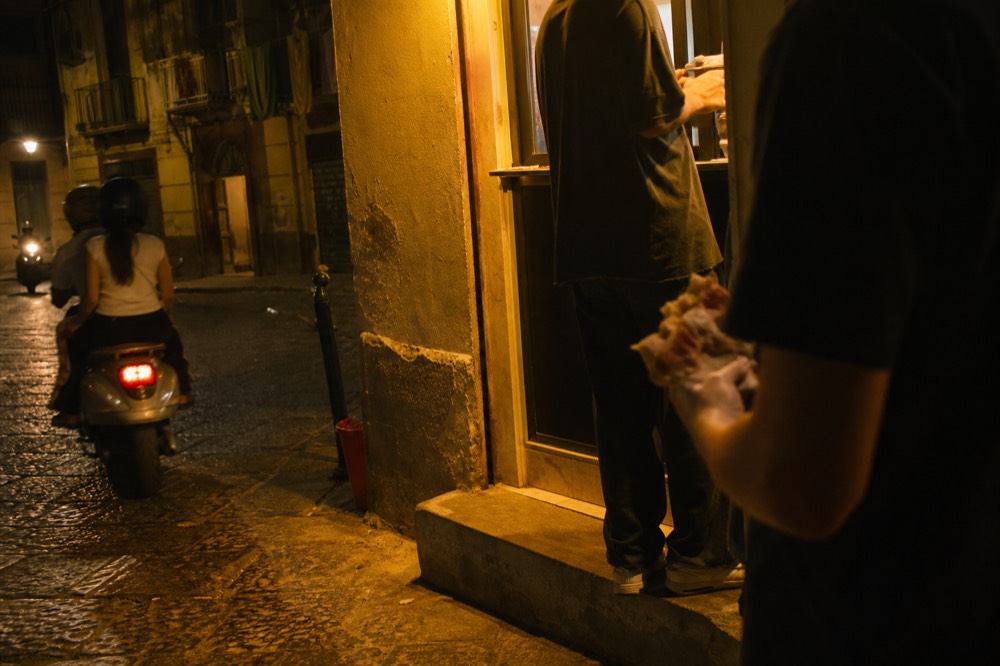
Order at the counter, pay where they tell you to pay, eat where you bought it or while walking, and do not sit down unless you intend to be served. Coffee is drunk standing in ninety seconds. Pastry is eaten over the paper. Nobody carries food back to a hotel room, and nothing here needs a fork.
The mechanics vary slightly by venue. Many bars want payment at the till first, then the receipt handed to the barista. Friggitorie usually take the money at the counter. Market stalls prefer small cash and will tell you the price by weight in grams, not by piece. None of this is a test, and pointing works everywhere.
A few conventions are worth respecting because they are about turnover rather than manners. Do not linger at the counter once you are served, because someone is waiting. Do not ask for a folded pizza to be boxed. Do not order a cappuccino after lunch, which is the one rule people love to repeat and which is nonetheless true.
Safety is the other thing worth handling calmly. Petty crime, mainly pickpocketing and bag snatching, is the actual risk in crowded lanes and around the station, while violent crime against visitors is rare and a dedicated tourist police unit was rolled out across high-traffic areas through 2025. Eat with your bag in front of you, keep your phone in a pocket rather than a hand, and stop worrying: our honest safety picture sets out what does and does not warrant caution.
What a DIY street food circuit costs, item by item
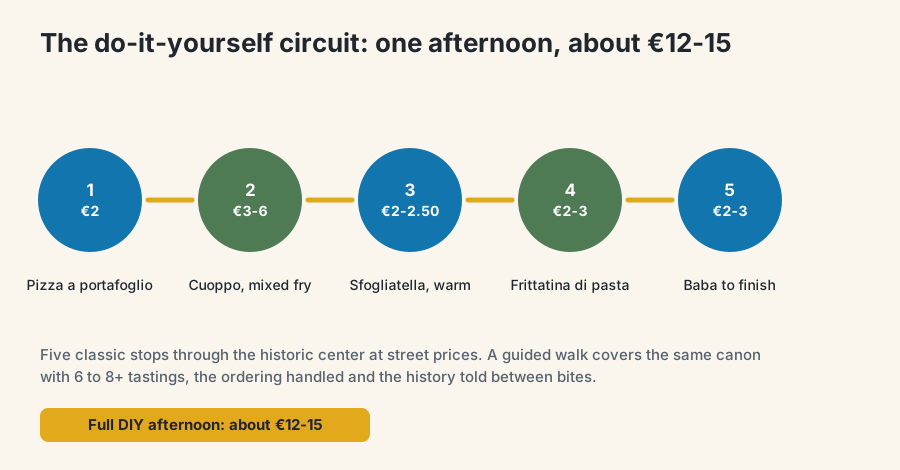
The classic three-item circuit of folded pizza, cuoppo and sfogliatella is repeatedly cited at €12 to €15, or under €20 for a whole day. Counter prices alone come to less than that. The gap is the coffee, the water and the second thing you did not plan on buying, which is most of the enjoyment.
Here is the arithmetic laid out honestly, because the €12 to €15 figure gets quoted without explanation and then people wonder where their money went. Line-item counter prices for three things land around €8. Real spend lands higher because street food in Naples is a compounding activity: you buy a frittatina because it is sitting there, then a coffee to go with it, then a babà because you walked past Scaturchio.
| Circuit | What is in it | Realistic spend |
|---|---|---|
| The classic three | folded pizza, cuoppo, sfogliatella riccia | €12 to €15 with drinks |
| The five | add a frittatina and a babà | roughly €16 to €21 |
| The full day | add a seated margherita with cover in the evening | roughly €18 to €24 |
| Two people sharing everything | the same list, split, one of each per stop | about the same as one person eating alone twice |
| Coffee, all day | espresso at the bar, standing, several times | small, and it is never the line that hurts |
The other number that surprises people is the tourist tax, charged per person per night by accommodation class at €4.00 to €6.00 for 2026 and collected at checkout. It has nothing to do with food and everything to do with the budget you thought you had. For the pizza-specific version of this math, see what a pizza actually costs.
Is a guided street food walk worth it over doing it yourself?
If you have three days and enjoy research, doing it yourself works and costs €12 to €15 in food. A guided walk costs from $33 for two hours and six stops, or from $49 for three hours and eight or more tastings. What you buy is timing, off-axis counters, and not spending your first afternoon working out which window is best.
The honest comparison is not food versus food. A walk includes the tastings, so the food cost collapses into the ticket, and the real question is what the difference buys. On a good route it buys three things: counters that are not on the main tourist axis, arrival at the right hour for a fresh tray or a fresh pot of oil, and someone who can explain what you are eating while you are eating it.
| Doing it yourself | On a guided walk | |
|---|---|---|
| Food cost | €12 to €15 for the classic circuit | included in the ticket price |
| Ticket | none | from $33 for 2h and 6 stops, $49 for 3h and 8+ tastings, $105 for a premium small group |
| Which counters you reach | mostly the ones on the main axis | the ones a few streets off it |
| Planning time | an evening of reading and mapping | none |
| Timing | luck | routed to the bake and the fry |
| Flexibility | total, change your mind anytime | fixed route and start time |
| If plans change | not applicable | free cancellation up to 24 hours before on all eleven tours we list |
For most people the answer is one walk early in the trip and self-guided eating afterwards, which is why the flagship three-hour route is the one we point at most often: the local-guided walk with eight or more tastings, rated 4.9 across 5,699 reviews, sits alongside cheaper and pricier options in guided street food walks. If you would rather do all of it alone, the DIY walking route maps the same ground stop by stop, and the complete Naples dish list covers what to order at each one.
When to go, what closes when, and how to time a street food day
The two closures that wreck plans are the friggitoria afternoon gap, roughly 14:30 to 16:30, and Sunday, when the Pignasecca and many fry counters shut. Attanasio closes Monday. Street windows and pizzerias run longest, with one on Via dei Tribunali going to about midnight.
Build the day around the fry counters, because they are the least forgiving. That means a pastry-and-coffee start before nine, folded pizza around eleven when the ovens are hottest and the queues have not formed, a long flat middle, then fried food from about five when the friggitorie reopen with fresh oil, then seated pizza after eight once the ticket queue at the famous rooms has thinned.
| When | Open | Closed | Best move |
|---|---|---|---|
| Monday | pizzerias, street windows, most fry counters | Attanasio, and market stalls run quieter | folded pizza at midday, seated margherita at night |
| Tuesday to Saturday | effectively everything | the full circuit, market included | |
| Sunday | pizzerias, pastry counters, seafront stands | La Pignasecca, Friggitoria Vomero | pastry, seated pizza, taralli on the Lungomare |
| 14:30 to 16:30, any day | pizzerias, bars, pastry counters | many friggitorie | a pastry break, not a fried one |
| After 21:30 | street windows, pizzerias | fry counters, market | folded pizza right through to about midnight |
Season matters less than most cities. Naples eats the same list in February and August, and the summer difference is crowd rather than menu: an average of three cruise liners dock daily in summer, which fills the Spaccanapoli axis between about ten and four. The oldest trick in the city is to eat when the ships are docked and the historic center is quiet at either end of the day, then use the middle for something indoors.
One last thing on the sweet end of the timetable. If you are here on a Sunday, go to a pasticceria at noon. It will be full, loud and entirely local, everyone buying boxes for lunch, and it is the clearest picture of how this city actually eats that you will get for €2.50. For a slower version of the same idea, the evening routes run once the day-trip crowd has gone and the counters belong to the neighborhood again, and you can weigh them against every tour we compare in one place.
Prices here reflect what the counters and listings were charging when we last checked, and the ranges hold because Naples street food has stayed stubbornly cheap while the city around it has got busier.